Why Home Radon Testing Matters in Pennsylvania
@homeradontestingview
October 18, 2026 · 7 min read
The Invisible Risk in Your Basement
Radon gas is a silent, odorless threat that can seep into any home. In York County, Pennsylvania, the geology makes it more likely that homes will have elevated levels. I have seen many homeowners in this area assume their house is safe because it is new or because they do not smell anything. That assumption can cost them their health. The only way to know if radon is present is through proper home radon testing.
I have spent years working with radon mitigation systems, and I can tell you that the testing process is straightforward. Yet a lot of people skip it or do it wrong. They buy a single test kit, place it in the wrong spot, and then trust the result. That leads to false confidence or unnecessary worry. Let me walk you through how to get a reliable reading and what to do with it.
Understanding Radon Gas and How It Enters
Radon gas comes from the natural decay of uranium in soil and rock. It moves up through the ground and into the air. When it gets trapped inside a building, it can build up to dangerous levels. The EPA recommends action at 4 picocuries per liter of air, known as the Action Level. But even lower levels carry some risk. Long-term exposure is the second leading cause of lung cancer after smoking.
The gas enters through cracks in the foundation, gaps around pipes, and openings around sump pumps. Basements and crawlspaces are common entry points. In York County, many homes are built on soil with high radon potential. That is why local health experts and the county health department urge residents to test every two years. Even if your neighbor tested low, your house might be different. Soil composition varies from lot to lot.
Types of Home Radon Testing
There are two main approaches to home radon testing: short-term and long-term. A short-term radon test typically lasts two to seven days. It gives a quick snapshot. This is useful when you are buying or selling a home and need fast results. The most common device for short-term testing is a charcoal canister. You open it, leave it in the lowest livable level of the house for the prescribed time, then mail it to a lab. Results come back in a week or so.
A long-term radon test lasts more than 90 days. It gives a more accurate average of the radon levels throughout the year because radon fluctuates with seasons, weather, and how much you run your HVAC. Long-term tests often use an alpha track detector or a continuous radon monitor. The continuous radon monitor plugs into a wall and records readings over time. It costs more but gives you real-time data and a detailed report.
Which Test Should You Choose?
For a home you already live in, a long-term test is better. It smooths out daily spikes and gives you the true annual average. The EPA recommends long-term testing for initial screening. But if you need results quickly, a short-term test is fine as a first step. Just know that the reading might be higher or lower than the actual long-term average. I always tell people to do two consecutive short-term tests if they cannot do a long-term one. That gives a more reliable picture.
How to Run a Radon Test Correctly
Place the radon detector in the lowest room you use regularly. That could be a basement family room, a home office, or a bedroom. Do not put it in a closet, a bathroom, or a kitchen. The device needs to be in a room that is occupied at least four hours per day. Keep it away from drafts, windows, and exterior walls. Close all windows and doors to the outside for at least 12 hours before starting and during the test. The test kit instructions are specific. Follow them exactly.
I once helped a homeowner who got a reading of 8 pCi/L. He had placed the test kit near an open window in the basement. After we moved it to a proper spot and retested, the result was 12 pCi/L. That is three times the Action Level. The first test gave him false reassurance. Proper placement matters.
Interpreting Your Results
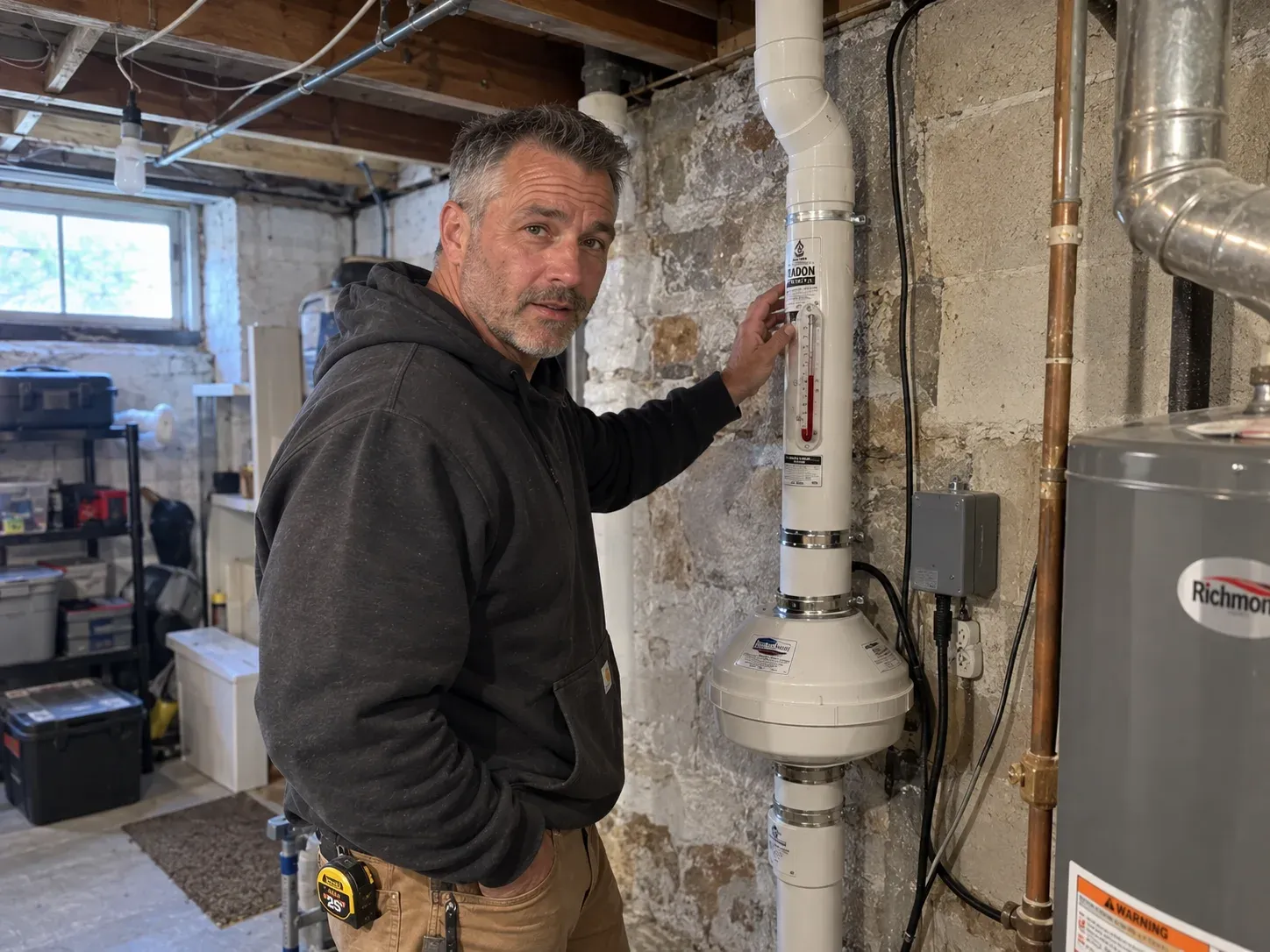
If your test shows radon levels at or above 4 pCi/L, the EPA says to fix your home. Do not panic. Radon mitigation is a well-understood process. The most common method is sub-slab depressurization, also called soil suction. A pipe is inserted through the basement floor into the gravel layer below. A fan creates a vacuum that pulls radon gas from under the house and vents it safely above the roof. This system can reduce radon levels by over 90 percent.
For homes with a crawlspace, the approach is different. You might seal the crawlspace floor with a thick plastic liner and vent the area with a fan. Sealants around cracks and joints help reduce the entry points. But sealing alone is rarely enough. You need active soil suction to pull the gas away before it enters the living space.
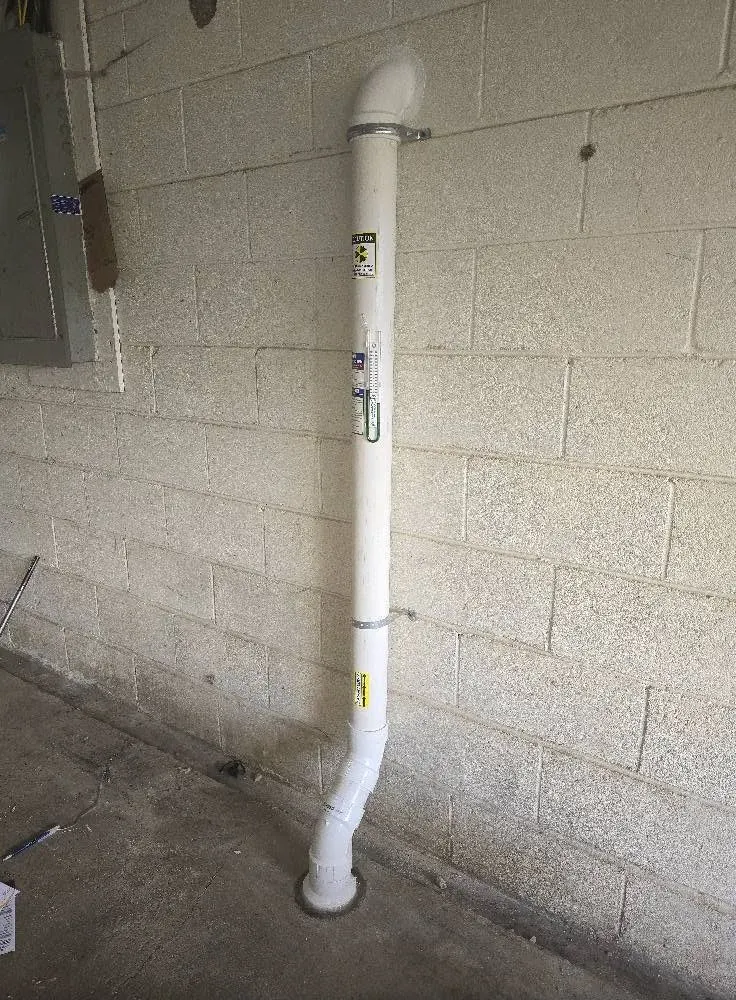
I have installed dozens of these systems in York County. The cost varies based on the house layout, but it is usually a few thousand dollars. That is a small price for reducing your family's lung cancer risk. Some homeowners try to save money by buying a fan and doing it themselves. I have seen that go wrong more often than right. Improper installation can create negative pressure that pulls in other contaminants or makes the system less effective. Professional radon testing after mitigation is essential to confirm the fix worked.
Where to Get a Test Kit
You can buy a test kit online, at a hardware store, or through the county health department. Many local health departments in Pennsylvania offer free or low-cost kits. The EPA also provides a list of certified testers. If you want the most accurate results, consider hiring a professional radon testing service. They use calibrated continuous radon monitors and follow strict protocols. That is especially valuable if you are selling a home or if your initial test was borderline.
I have noticed that people who do their own home radon testing with a charcoal canister often forget to mail the kit in time. The sample can degrade if it sits in a hot car or on a shelf for weeks. Set a reminder on your phone to mail it the same day you seal the canister. The lab results usually arrive within two weeks. Once you have the number, you will know if you need to act.
Common Mistakes to Avoid
- Testing during a storm or when windows are open. That dilutes the radon and gives a false low reading.
- Placing the detector in a room you rarely use, like an unfinished basement. You want to measure the air you breathe.
- Using only one short-term test and taking it as final. Two tests or a long-term test are more reliable.
- Ignoring the results if they are just above 4 pCi/L. That level still carries risk, and mitigation is recommended.
- Assuming radon only affects old houses. New construction can also have high levels, especially if built on soil that emits radon gas.
Long-Term Monitoring
After you install a mitigation system, you should retest the home every two years. The fan in the system can wear out, and changes to the house, like new windows or a remodel, can affect air pressure. A continuous radon monitor is a good investment for ongoing peace of mind. It plugs in and alerts you if levels spike. Some models connect to your phone. I recommend them to anyone who wants to be certain their system is still working.
I recall a customer in York County who had a sub-slab depressurization system installed in 2018. He tested every year and always got readings below 2 pCi/L. Then in 2022, his continuous monitor showed 5 pCi/L. We found that the fan had stopped working. The fix was a simple replacement. Without the monitor, he might have gone months breathing elevated radon without knowing it.
Final Thoughts
Home radon testing is not a one-time task. It is an ongoing part of home maintenance, especially in Pennsylvania where the geology works against us. The test itself is cheap and easy. The consequences of skipping it are serious. If you have not tested your home in the past two years, buy a test kit this week. Place it correctly, follow the instructions, and send it in. If the result is above 4 pCi/L, call a radon mitigation professional. Do not try to solve it with sealant and a box fan. That rarely works.
I have seen too many families in York County wait until after a lung cancer diagnosis to think about radon. By then it is too late. A simple test can give you the information you need to protect your health. Do not assume your home is safe. Test it.